

Namibia has one of the highest youth unemployment rates in Africa: According to BMZ, it was around 38% among 15- to 24-year-olds in 2023. Unemployment among young adults is particularly high in urban poverty areas and is exacerbated by insufficient school qualifications, low literacy levels and a lack of vocational prospects. Many young people leave the formal education system early without acquiring the basic qualifications needed for the labour market. Namibia's school system provides for 11 years of formal education. Those who do not complete these are denied access to Technical and Vocational Education and Training (TVET) centers, meaning that disadvantaged youth in particular is systematically excluded from vocational training.
In addition, the formal vocational training system in Namibia presents high entry barriers, especially for youth with low levels of formal education or informal backgrounds. Women are also affected by gender-specific access barriers. At the same time, there is a high demand for simple services in the construction and repair sector, which could be met by low-threshold qualification measures.
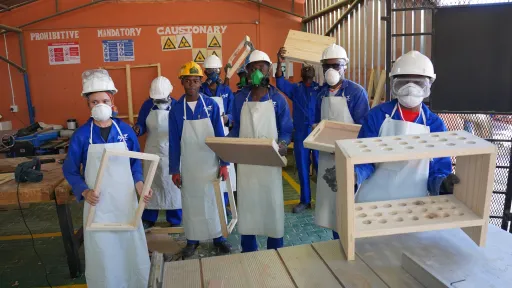
The starting point for the project is the positive experience gained from the Capture I and Capture II projects funded by the Berlin State Office for Development Cooperation. These projects focused on training measures for informal street vendors in Windhoek. The approaches tested there – particularly the teaching of basic manual skills – will now, in a project under the german government and federal states programme, be systematically developed further and transferred to a broader target group. The focus will be on practical, short-term education measures to convey basic technical skills such as repairing doors, windows and sanitary facilities as well as simple installations.
This qualification will enable participants to access initial income opportunities and sustainably improve their employability and social participation.
Project goal
The project aims to reduce the skills gap among young people in Namibia and to strengthen them through practical vocational training, entrepreneurial skills, gender equality and civic education – for a self-determined and socially engaged life.